• Skip to primary navigation
  • Skip to main content
  • Skip to primary sidebar

My Obstacle Course: Engage, Encourage and Empower

A fun, structured, systematic way to work on your child's strengths and weaknesses at home!

  • Welcome to My Obstacle Course!
  • What is My Obstacle Course?
  • Developmental Timelines
    • What Is My Child Ready For?
  • About Us
  • Blog
  • Contact Information

Search Results for: food coloring

My Obstacle Course Kit Item #6: Food Coloring

My Obstacle Kit Item #6: Food Coloring

When thinking about how to make activities fun in order to make building more challenging skills exciting, I thought back to teaching my “Colors” unit in kindergarten. The students loved experimenting and learning how different colors are made. I started using food coloring in My Obstacle Course station activities with Andrew and got to see the same look of wonder and joy as he saw firsthand what happens when two colors blend together. So easy and so fun!!

Food Coloring

Uses:

  • drops of color into water combined with droppers, bulb syringe or turkey baster to build fine motor skills while experimenting with color
  • drops of color into shaving cream or frosting to build hand and arm muscles by mixing with spoon

Sample Activities:

These are all pretty straight forward station activities. Click here for a food coloring post search from my website but these photos give a good idea of how we have used food coloring to add some color to station activities aimed at building hand muscles and muscle control.

My Obstacle Course Station Activity: Adding food coloring to make orange shaving cream for autumn themed shaving cream writing station

Food coloring + shaving cream

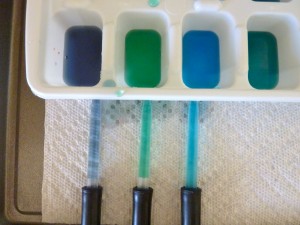
My Obstacle Course Station Activity: Color fun with droppers

Droppers and Colored Water

My Obstacle Course Station Activity: Use hands to squeeze bag so frosting mixes and makes it colored

Frosting in a Ziploc bag with food coloring added. He had to squeeze and press out the frosting so the color would spread.

My Obstacle Course Station Activity: Use spoon to mix and make the frosting turn green

Making green frosting for March themed My Obstacle Course.

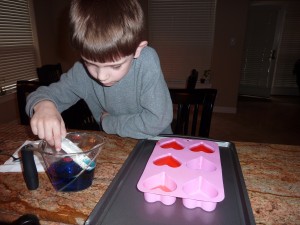
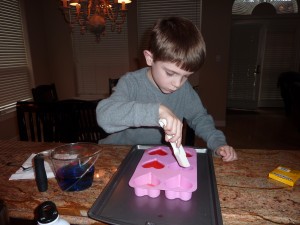
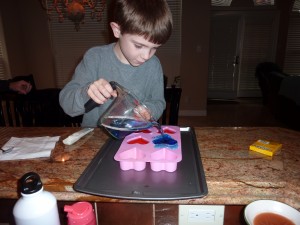
My Obstacle Course Station Activity: Pour colored water to fill muffin pan

Working on pouring skills using colored water and heart-shaped muffin pans for February themed course.

These are just some ways we have used food coloring in My Obstacle Courses to make them a bit more fun. Such an easy add in that helps to motivate and inspire experimentation. Have fun!!

Engage, Encourage and Empower!


Building Hand Strength with Frosting and Food Coloring

I was looking for ways to build Andrew’s hand strength, particularly the muscles that allow the hand to squeeze and squash things. I have shown how I’ve used frosting in a cake decorator (Cookie Cutter Decorating) to work on this and was particularly excited about his interest in making colors with food coloring and thought about combining the two. Knowing that he doesn’t really like to get his hands sticky (neither do I!) I turned to one of my favorite items for containing messy things – the Ziploc bag.

My Obstacle Course Station Activity: Squeeze the frosting to make new colors.

Station Activity Set Up:

I scooped some whipped frosting into the bag and placed some drops of food coloring, strategically scattering them around so they wouldn’t all be clumped in the same spot. For this particular station activity I choose yellow and blue food coloring because it was March and I wanted him to see how those two colors make green. With the prep work done for this (another easy station to set up – time spent, probably less than a minute!) it was ready and waiting for My Obstacle Course to begin.

My Obstacle Course Station Activity: Squeeze the frosting to make new colors.

At The Station:

When he got to the station, he read the directions that he was to squeeze and squish the frosting so the colors would mix or combine. I demonstrated how to do this and showed how he could lift the bag and squeeze the frosting to move it around. He pushed and pressed, made a fist and pounded the frosting. It was hard work for him but he was also so excited to see the colors changing as the mixed in, first turning the frosting yellow and blue in sections and then mixing to make green. I loved it because it was really working his little hand muscles without him getting upset or bothered by sticky frosting on his hands. (Working on sensory tolerance for the stickiness is a station on its own, one done right at the sink 🙂 . But my goal for this activity was to build fine motor, hand strength.)

When you are done, the bag of colored frosting does not have to be disposed of just yet. It can also be used to build beginning handwriting skills…


(Colored frosting in Ziploc bag)

the same way I showed with No “Ick” Finger Painting! Your child can practice making shapes, letters and numbers in the colored frosting while also building finger and hand strength.

Engage, Encourage and Empower!

Different Shades of Blue

In keeping with the summer, beach themed My Obstacle Courses, I’m including a station to use the primary colors to make different shades of blue, like water. This is something that only takes a few minutes to set up but is so fun for children to get to play around with. An activity like this also goes along nicely with building some pretend skills, like pretending to be a scientist experimenting or a magician who is making “magic potions.”

My Obstacle Course Station Activity: Different Shades of Blue

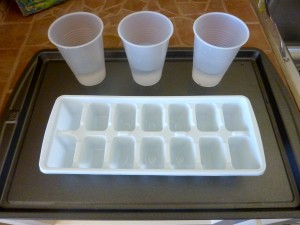
I usually set up a station activity like this near a sink to make it easier to access water for set up and clean up. A rimmed cookie sheet is a perfect “tray” to place below the tools to help catch any stray water or color. I’m all about ease and containing messes :).  I used some clear plastic cups in this particular station but have used ceramic ramekins in past stations and find that those are really helpful if you have children who tend to knock things over, not because they want to, but because they don’t have the hand control. The ramekins are low and heavier than plastic so they don’t tip as easily). I am also using a white ice-cube tray to help the colors stand out even more.

Rimmed cookie sheet, clear plastic cups with water and an ice cube tray.
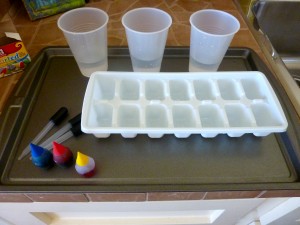
Additional tools of food coloring (red, yellow and blue - the primary colors) and droppers.

I love including droppers with something like this because it also helps to build fine motor skills! (Click here for a past post on droppers.)

Each cup has a different color and it's own dropper.

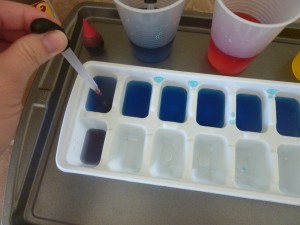
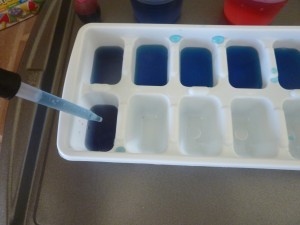
This is where you get to benefit from my experience. I began thinking that I would simply have him use the droppers to fill each section (like shown in the picture below where I had started in the far left corner of the tray) but when I tried it (which I always do before I pass them on to you or try them with him!) it was taking a really long time. I shifted my plan and decided to fill a cup with blue water (also shown below) and fill half of the ice-cube tray with the blue water.

Change in plans!

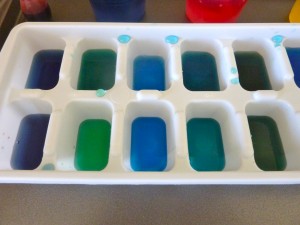
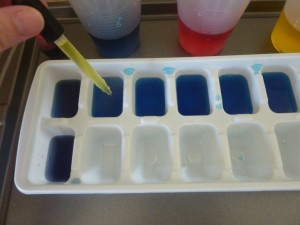
Ahhhhh….much better! Now, I add the colored water to each blue section to make different shades of blue.

Adding red...
...makes purple-ish water.
Adding yellow...
...makes greenish water.
My different shades of blue!
The colored water in the droppers to show the difference.

This was fun for me and is always a huge hit with Andrew! Have fun!!

Engage, Encourage and Empower!

Stir Up Some Fun With Spring Colored Whisks!

I found these colored whisks at Target and besides being perfect for using in a spring themed My Obstacle Course, I realized they would be perfect for building a skill I was working on with Andrew.

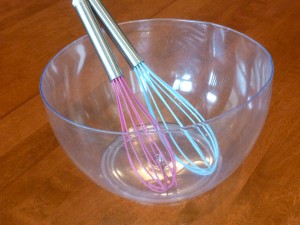
Spring colored whisks

If At First It Doesn’t Work, Try Something Different

I had introduced a stirring activity with him (stirring frosting with a spoon) and realized that it was too challenging for him because he didn’t have the hand muscle strength to dig in and move it around. I thought that these whisks would be perfect for him to build his hand muscles while grasping the handles and moving it through something that would provide just a little resistance…water!

This is such a simple activity, and probably one that many of you have done with your children, however as Andrew grew up we never really had those pretending to “make soup” on the kitchen floor with pots and wooden spoons or “splash in the kitchen sink” water experiences. While he loves swimming, bathing and showering, he doesn’t like the possibility of getting wet and having wet clothes on.

(Recent story about to illustrate this…Last week when we went to Morgan’s Wonderland and there was a really cool water experimentation-station. There were lots of spinning parts, which he LOVES, but I could tell he was anxious about getting wet. He even came up to me and said, “Next time I wear my swim suit and swim shirt so I can’t get wet.” In his mind, the rule must be – “It’s okay to be wet in a swim suit.” I showed him the complete change of clothes that I had in my bag and assured him that he could change his clothes when he wanted. This helped tremendously and he was then willing to step in closer and really experiment with some cool things! I will post pictures of him at this station to my Facebook page.)

I have learned to reintroduce things that didn’t work before by making small tweaks, which also gives me a lot of insight as to what is standing in his way or what he is ready to handle at that time.

My Obstacle Course Station Activity: Stirring Water With A Whisk

I used a large plastic bowl…

Large plastic bowl

added the whisks…

Whisks and bowl waiting for water

some water and a few drops of food coloring when we got to the station! I also placed a rimmed cookie sheet under the bowl to catch any spills. The food coloring is not essential but I do find that it helps give this activity purpose, especially for someone who needs to see the purpose in doing something before fully engaging.

At first he hesitated, worrying that he wouldn’t be able to do it like he wanted but I could see he was curious about what would happen with the food coloring if he gave it a stir! I began by placing my hand over his so he could feel the pressure necessary to hold the whisk and also to show him how to move it around the bowl.

Stirring the water to make it green.
Really stirring now!

Sometimes you have to look no farther than your kitchen cupboards to help your child build skills. The colorful whisks just add a bit of fun and also keep his tools separate from mine 🙂 .

Engage, Encourage and Empower!


Easy Theme Reinforcers – March

One of the main reasons I came up with My Obstacle Course was to find a way to engage with Andrew at home while doing reinforcement activities for therapies and school. I found that utilizing a theme for each Obstacle Course allowed me to work on skills in all developmental areas while being purposeful and meaningful for him. The themes can range from a general monthly theme to a specific theme that is reinforcing what your child is learning about in school but what they do is help to tie all the different stations together.

Easy Ways To Reinforce A Theme:

I have had many people comment that it must take a great deal of time to prepare the activities and while it does take a little time and preparation (most of which I hope to make easier for you through my posts!), there are so many easy ways to make activities thematic. For example, it is March and so for the entire month (even after St. Patrick’s Day) I use thematic helpers like shamrock shaped calendar cutouts.

Memory Match game made from shamrock shaped calendar cutouts.

I also gather up anything green (or whatever goes with the theme) that I can find that can be used, such as…

  • a green ball or balloon for bouncing, tossing, catching, kicking, rolling, etc.
My Obstacle Course Station Activity: Pass the green ball back and forth 10 times.
  • green ink for my letter stamps
My Obstacle Course Station Activity: Alphabet stamps with green ink.
  • “Green Eggs and Ham” by Dr. Seuss for a reading or listening station activity
My Obstacle Course Station Activity: Read "Green Eggs and Ham" by Dr. Seuss
  • green dice to roll for number identification, addition, subtraction, multiplication – Link to previous post on dice.
  • green markers or crayons for drawing, texture rubbings, letter, number or word writing practice
  • green Duplo blocks for fine motor skill practice by putting them together or pulling them apart
  • blue and yellow food coloring in water to be combined to make green with dropper or baster – Link to previous post on using droppers.

These easy to put together station activities, along with other ideas I share, make it easy to build skills he is ready for in a way that is fun, colorful and kid-friendly. I encourage you to go on a “green” hunt in your child’s toy box, cupboard or closet and you may be surprised at what you find that can be incorporated! Once I began doing that, I realized that I could use toys and tools in ways other than their originally intended purpose. It made things so much easier for me and also more fun for Andrew because while he might recognize the objects, he never knew how I was going to have him use them. I just love ideas that help me use the element of surprise to keep him engaged with me!

Engage, Encourage and Empower!
Building Pouring Skills

Most young children spend a great deal of time in the bathtub playing and while they are playing, they are building skills that will help them later on. Andrew enjoyed hanging out in the tub, but he kind of did just that – he hung out in the tub, floating around, holding his breath under water but he did not “play” in the tub the way I remember playing. For me this involved measuring cups, filling and pouring, transferring soapy water from one container to another.

One day, he was wanting to pour his red V8 Fusion juice into a cup and I reached for it to do it for him while he held the cup. Why did I do this? Because I’m a bad, controlling mom? I don’t believe so. I did it because he’d never poured juice at home, I wasn’t sure he could do it and I really didn’t want red juice all over the floor. I got to thinking about this, felt kind of bad that I didn’t let him try but decided that I would give him more opportunities to build his pouring skills without involving my nervousness.

Providing Opportunities To Build Pouring Skills

I gathered up some old cups, little watering cans, and Tupperware containers for the bathtub and showed him how he could fill and pour using those tools. Sometimes I need reminders that just because he wasn’t ready for a certain play skill earlier, doesn’t mean he won’t be ready for them later.  He wanted to pour and was using his “kid power” to meet his own wants. (“Kid power” (as described by Occupational Therapist Julie Kraska, who we saw for an evaluation years ago) is when a child wants to exert his/her independence and has the “I can do this by myself” attitude. Andrew was always very cautious and needed me nearby (probably because I could understand him when no one else could) so we hadn’t really seen his “kid power” attitude emerge until this past year.)

I was excited about this and decided to add it as a My Obstacle Course station so he could practice it in a more real life situation. He wasn’t expecting this at all, tilted his head a bit and gave a huge smile. He LOVED it!!

My Obstacle Course Station Activity:  Pouring Water Into Muffin Tin

My Obstacle Course station activity: Pouring water into the muffin tin.

This station activity took about 2 minutes to gather materials and set up – I love activities like this! It was February so I used a heart-shaped silicone muffin tray that I found in the dollar section of Target.  I used my rimmed cookie sheet to catch any stray water and also set out a towel in case his hands got wet. (It always interests me that he can spend hours in the shower, tub or pool but dislikes having water on his skin other times.)

We used a liquid measuring cup and filled it with water.  First we added red food coloring to make red water and when that was empty, we got some more water and added blue food coloring to make blue water. (You could leave out the food coloring if you want but I like how it provides a visual contrast between the muffin tin and the water.)  I set out a spoon and a measuring spoon for him to experiment with those as well.

Andrew transferring water with his measuring spoon.
Water transferred. Look at his intense focus!

He had so much fun, beginning very cautiously, not wanting to let any spill to feeling confident enough to pour right from the measuring cup into the hearts.

A little smirk at the water is overflowing.

After that, we worked on how to tilt the cup back when the liquid got near the top so it wouldn’t spill over but it wasn’t a big deal because of the cookie tray underneath.

So Basic Yet So Fun!

It was really fun to be able to work on this skill with him in a playful, stress free way. This was an activity designed for him to be able to just experiment and enjoy building his pouring skills. It was a great play station because we did not need to have an exact amount of liquid poured into something like you do when cooking or baking.  He had an absolute blast and we’ve done this many more times with different kinds of muffin and bread tins. I’ve seen a huge improvement in not only his ability to pour but his confidence while doing it as well.

Engage, Encourage and Empower!
Next Page »

Primary Sidebar

Obstacle Course Mom’s Blog

  • When People Stare, Mind Your Own Business
  • ABC’s of Peaceful Parenting Tele-class
  • What’s Perfect About This?
  • Exciting News!
  • Halloween

Categories

  • Blog
  • Cool Tool
  • Fine Motor
  • Getting Started
  • Gross Motor
  • Literacy
  • Math
  • My Obstacle Course Station Ideas
  • Oral Motor
  • Problem Solving
  • Sensory
  • Social Skills
  • Uncategorized

Archives

  • July 2012 (1)
  • May 2012 (1)
  • January 2012 (1)
  • November 2011 (2)
  • October 2011 (12)
  • September 2011 (14)
  • August 2011 (15)
  • July 2011 (19)
  • June 2011 (18)
  • May 2011 (21)
  • April 2011 (20)
  • March 2011 (22)
  • February 2011 (19)
  • January 2011 (21)
  • December 2010 (22)
  • November 2010 (6)

Meta

  • Log in
  • Entries feed
  • Comments feed
  • WordPress.org